What a rebuild typically includes
Everything that wears, replaced. Everything else, kept.
The exact scope is engineered to the mill in front of us. The categories below are the usual list, and most rebuilds touch most of them. We do not rebuild for the sake of rebuilding; if a subsystem is healthy, it stays.

Not every customer needs a new line. Sometimes the frame is sound, the layout works, and the capital cost of a full replacement is hard to justify. What is killing the plant is worn tooling, an obsolete PLC, drives that are no longer supported, and capability gaps the original builder never planned for.
That is the rebuild conversation. We take a legacy mill, ours or someone else's, and bring it back to current TEKFAB capability. New rolls. New bearings. New controls. New HMI. New safety circuit. Optional servo-controlled gauging, AntiFlare, and TEKConnect on top. The frame stays. The plant layout stays. The economics stay friendly.
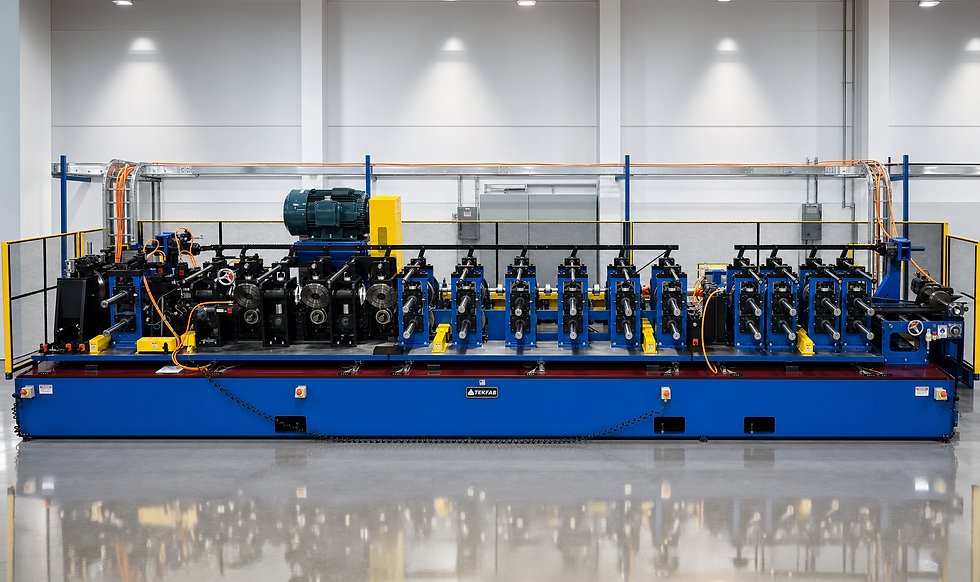

Services, Rebuild & Retrofit
Rebuilding & Retrofit
Bring a tired mill back to current capability. New tooling, new controls, modern technology, the same frame.
Capability envelope
Add a Title
Add a Title

How a rebuild project runs.
First the audit. A TEKFAB engineer surveys the mill on your floor or, in some cases, by drawings and photos. We measure the frame, run a section sample, read the existing controls, and document the wear pattern. That audit becomes the scope of work and the quote.
Next the rebuild itself. The mill ships to TEKFAB in Oregon, Tennessee, or Ohio. Tooling comes off and goes to engineering. Bearings, drives, and electrical hardware are replaced. The frame is verified true. New rolls are cut to the customer-approved section and installed. The new controls go in. The line is wired, sequenced, and proven.
Then the buyoff. The rebuilt mill runs your section at production speed before it leaves our floor. You see it run. You approve it. Then it ships back, gets reinstalled, and starts earning revenue the day commissioning completes. Warranty starts from re-commissioning, not from purchase order.